The Quiet Mistake of Leaving a Negative Review Mid-Job-Search
 By Jobvisitors
September 24, 2026
5 min read
By Jobvisitors
September 24, 2026
5 min read
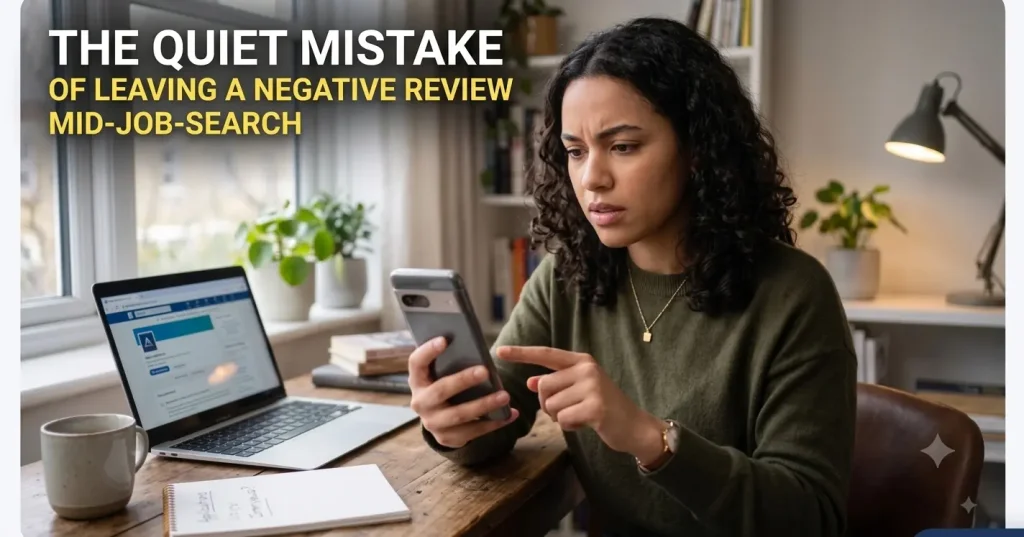
Meera left her previous company on negative review and, a few weeks into her new job search, wrote a detailed, honest review on a popular employer review site. She used a pseudonym, wrote it from a personal laptop, and felt confident it was anonymous — a fair account of a genuinely difficult year, meant to help other job seekers avoid the same team.
Three weeks later, deep into final rounds with a new company, the recruiter mentioned during a routine reference and background check that they’d come across “some concerns from your online presence” and would need to pause the process. Nothing was said explicitly, but the timing lined up with the review going live. The offer never came.

Table of Contents
How the Negative Review Mistake Usually Plays Out
The false sense of anonymity. Most review platforms don’t require your real name, which creates a feeling of safety that isn’t always accurate. Writing style, specific details, job title, and timeline can be enough for someone determined to narrow down who wrote it — especially in smaller companies or teams.
The company finds out sideways, not directly. It’s rarely a dramatic confrontation. More often, it surfaces through background checks, mutual connections, or someone at the new company who happens to know someone at the old one and mentions it in passing.
The consequence is vague, not explicit. Companies rarely say “we’re rescinding your offer because of a review you wrote.” Instead, it shows up as a stalled process, a vague concern about “fit,” or silence that never gets a clear explanation — which makes it hard to even confirm the review was the reason.
Why This Happens
Writing a review during a job search often comes from a genuine, fair impulse — wanting to be honest, wanting to help other candidates avoid what you went through. The mistake isn’t the honesty itself. It’s underestimating how small some industries and professional circles actually are, and how much specific detail (a project name, a manager’s known quirk, an exact timeline) can make an anonymous post identifiable to anyone who was actually there.
What Actually Counts as Identifiable
It’s rarely the review platform’s fault directly — most have real anonymity protections. The risk usually comes from the content itself: a specific enough scenario, a role that only one or two people held, a timeline that lines up exactly with your own LinkedIn history. Combined, these details can be pieced together even without a name attached.
What To Do Instead
- Wait until you’re settled in a new role before writing a detailed review, rather than mid-search — the same honesty holds just as much value a few months later, with less risk attached.
- Keep specific identifying details vague — avoid exact project names, precise dates, or descriptions specific enough that only a handful of people would match them.
- Separate venting from reviewing. If you need to process a bad experience, talking to a trusted friend or mentor carries none of the professional risk that a public post does.
- If you’ve already posted something and you’re mid-search, consider whether it’s worth editing for specificity — you don’t have to take it down entirely, but reducing identifying detail lowers the risk without losing the honest core of it.
- Remember that honest reviews still have value — this isn’t a reason to stop being honest about workplace experiences, just a reason to be thoughtful about timing and detail while you’re actively being evaluated by other companies.
If this feeling keeps circling back to “maybe it’s time for something new,” that’s worth listening to on its own terms — not because of someone else’s post, but because it’s what you actually want. JobVisitors has real openings worth a look when you’re ready.
The Line to Remember
Anonymous doesn’t mean untraceable — the details are usually what give it away, not the name you didn’t use.
FAQs
Can a company actually find out I wrote an anonymous review about them? It’s not guaranteed, but specific details — a project, a timeline, a role only a few people held — can make an anonymous review identifiable, especially in smaller teams or companies.
Is it illegal for a company to rescind an offer because of a review I wrote? This varies by jurisdiction and specific circumstances, and most companies wouldn’t state this as the reason even if it were a factor, which makes it hard to challenge directly. It’s safest to assume this risk exists rather than rely on legal recourse after the fact.
Should I take down a negative review while I’m job hunting? That’s a personal call, but if you’re actively interviewing, reducing specific identifying details is a reasonable middle ground between staying honest and reducing risk, rather than needing to delete it entirely.
Is it safer to just never write reviews about former employers? Not necessarily — honest reviews genuinely help other job seekers. The main adjustment is around timing and specificity, not whether to write them at all.