Why You Shouldn’t Announce a New Job Before Your Joining Date
 By Jobvisitors
July 12, 2026
5 min read
By Jobvisitors
July 12, 2026
5 min read
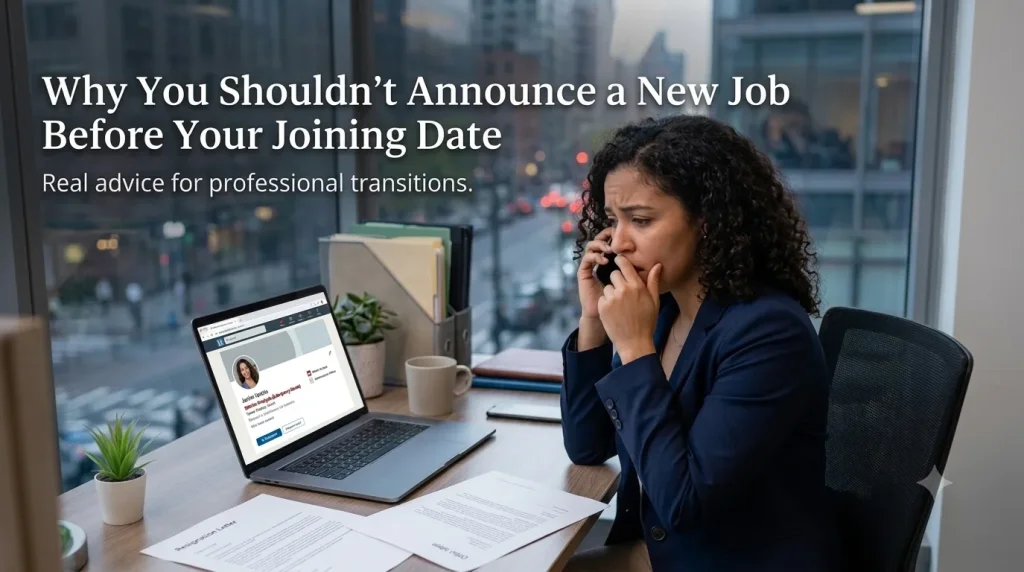
Ananya got the call on a Tuesday. Verbal offer, great package, dream company. By Tuesday night, she’d posted it — “Thrilled to announce I’m joining Amazon as a Software Developer!” — complete with the confetti emoji and forty-plus congratulations in the comments within an hour.
Three weeks later, before her joining date, the company put a hiring freeze on the role. The offer letter never came. And now she had to figure out how to explain, to the same 500 people who’d liked that post, that the job wasn’t happening.
This isn’t rare. It’s one of the most common, most avoidable mistakes people make between getting an offer and actually starting — and almost nobody warns you about it, because it doesn’t feel like a mistake in the moment. It feels like good news.
Why This Feels Right to Do — And Why That’s the Trap
Getting an offer after weeks or months of interviews is genuinely one of the best feelings in a job search, and wanting to share it isn’t wrong. The trap isn’t the excitement — it’s mistaking a verbal offer, or even a signed offer letter, for a done deal.
Between “you got the offer” and “you’re actually working there,” several things still have to happen: background verification, sometimes a formal contract signing, occasionally a hiring freeze or budget review on the company’s end that has nothing to do with you. Every one of those steps is a point where things can quietly fall apart, and none of them are visible from the outside when you’re busy drafting a LinkedIn post.
The announcement itself doesn’t cause the offer to fall through — but it does turn a private disappointment into a public one, at exactly the moment you’re least equipped to handle an audience.
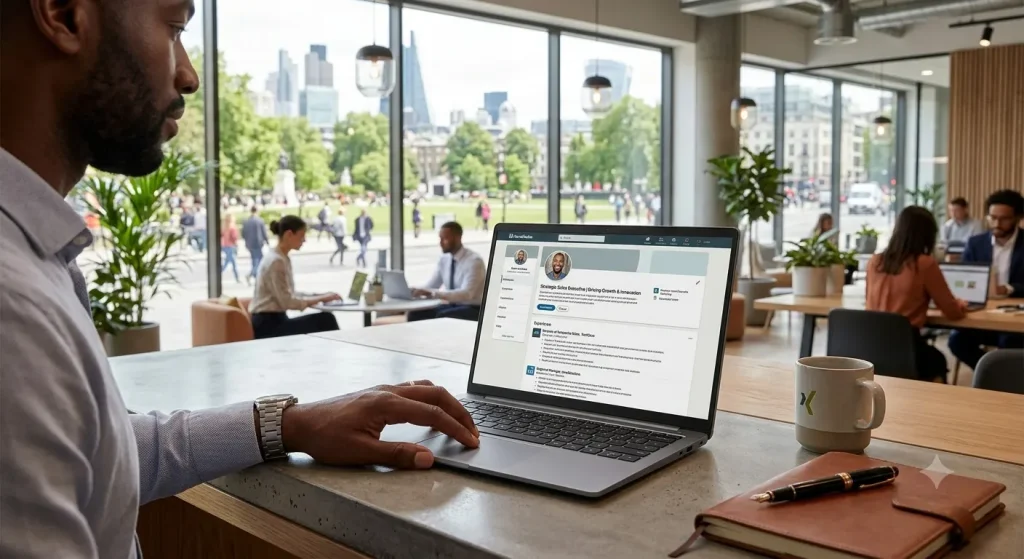
Table of Contents
What to Do Instead
- Wait until your actual joining date, not the offer date. The safest moment to announce is your first day, not the day you accepted. If you genuinely can’t wait that long, wait at minimum until background verification is complete and you have a signed, dated offer letter in hand — not just a verbal confirmation or an email saying “we’d like to move forward.”
- Celebrate loudly in private, quietly in public. Tell your close circle everything — call your parents, tell your friends, celebrate properly. Save the public announcement for once it’s locked in. The people who matter don’t need a LinkedIn post to know you’re excited for you.
- If you’re asked directly, be honest but measured. If a colleague or acquaintance asks what’s next, it’s fine to say “I’ve accepted an offer and I’m finishing up formalities” — that’s honest without locking you into a public commitment before it’s final.
- Understand your specific offer’s contingencies. Some offers are contingent on background checks, some on medical fitness, some on nothing beyond paperwork. Ask your recruiter plainly what’s still pending. Knowing exactly what could still go wrong tells you how long to wait.
- If you’ve already posted, don’t panic-delete in front of an audience. More on this below — deleting a public post the moment things go wrong often draws more attention than the original announcement did.
If You’ve Already Posted and the Offer Fell Through
If you’re reading this because it’s already happened, here’s the practical part, not just the warning.
Don’t rush to explain publicly. You don’t owe your network a real-time update on a private disappointment. A quiet edit or removal of the post a few days later, without commentary, is completely normal and nobody will think twice about it.
Don’t frame it as a personal failure when you talk about it. Offers fall through for budget freezes, restructuring, and internal politics far more often than anything about the candidate. If someone asks directly, “the role got put on hold before I could join” is accurate and requires no further justification.
Use the moment, don’t just survive it. The same energy that made you want to announce the job can go into your next search instead — reach out to the people who congratulated you and let them know you’re back in the market. Most people are glad to help, and you’ve just proven you’re the kind of candidate companies want to hire.
The offer that falls through after an announcement doesn’t erase the offer that got you there in the first place. Your ability to get hired didn’t disappear — only the timeline did.
If you’re back in the market and want to move without announcing anything to anyone, here are today’s fresh openings on Jobvisitors.
Frequently Asked Questions
When is it actually safe to announce a new job before my joining date? The safest point is your actual first day. If you want to announce earlier, wait until you have a signed offer letter and confirmation that any background verification or contingencies are cleared — a verbal offer alone isn’t a safe point to announce publicly.
Can a company really withdraw an offer after I’ve already accepted? Yes, in most cases a job offer can still be withdrawn after acceptance and even after a formal offer letter, particularly if it’s contingent on background checks, budget approval, or other conditions that haven’t been finalized yet.
Is it unprofessional to delete a LinkedIn post if my offer falls through? No. Quietly removing or editing a post a few days later, without public commentary, is a normal and low-drama way to handle it — there’s no obligation to publicly explain a private setback.
Should I tell close friends and family even if I’m not posting publicly? Yes — there’s no reason to sit on good news entirely. The distinction that matters is between your private circle, where the news is safe even if things change, and a public, professional audience, where an update-then-reversal is harder to walk back.