
How to Spot a Fake Job Offer Message — Quick Check
 By Jobvisitors
August 10, 2026
4 min read
By Jobvisitors
August 10, 2026
4 min read
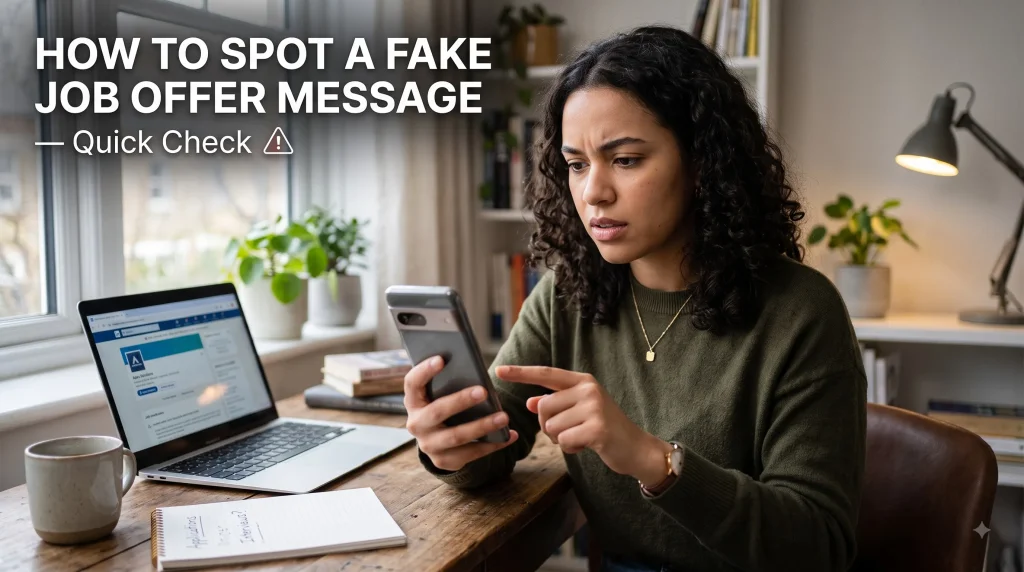
A message lands on WhatsApp or your email: your profile’s been shortlisted, the salary is excellent, and all you need to do is pay a small “registration fee” to confirm your slot. It feels exciting, then something about it feels slightly off — and you’re not sure whether to trust it or just be paranoid. Knowing how to spot a fake job offer message early is what makes the difference between a quick close call and an actual loss.
Run through this quick check before you respond to anything that feels remotely like this.
The Quick Check
☐ Were you contacted out of the blue, through WhatsApp, Telegram, or a personal number, without ever having applied to that company?
☐ Is the salary noticeably higher than the role or effort seems to justify — a large sum for minimal or vague work described only briefly?
☐ Were you asked to pay anything at all — a registration fee, security deposit, training charge, or “document processing” cost — before you’ve even started working?
☐ Was the selection process unusually fast or missing entirely — an “instant offer” with no real interview, or approval after a single short call?
☐ Were you asked for sensitive documents (Aadhaar, PAN, bank details) very early, before any formal, verifiable offer letter existed?
☐ Does the sender’s identity feel unverifiable — a personal number instead of an official company line, a generic or newly created profile, or no way to confirm they actually work where they claim?
If you checked even two or three of these, treat the offer as highly suspicious and stop before sharing any more information or sending any payment.
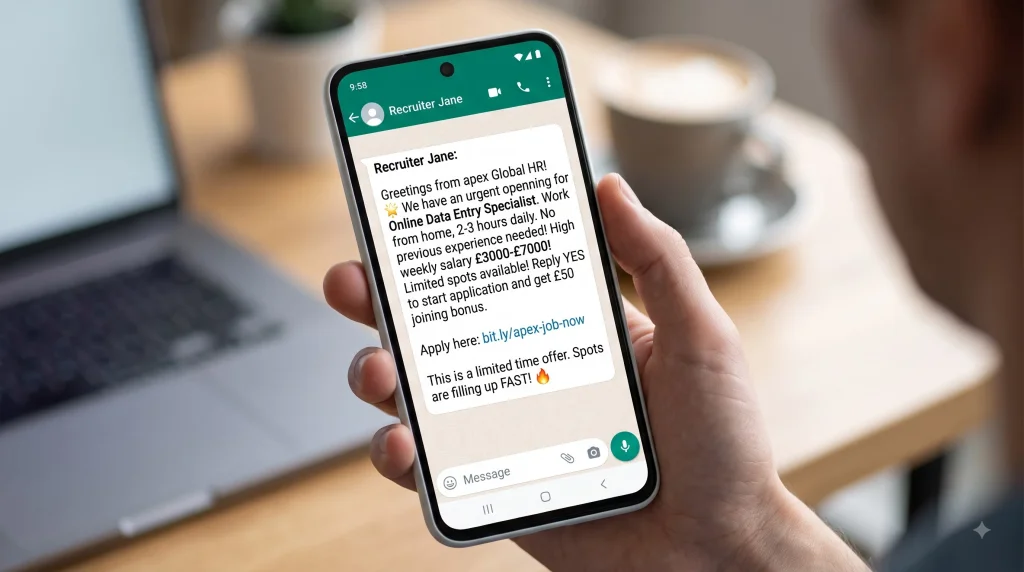
Table of Contents
Why This Works So Well on Job Seekers Specifically
Scam messages built around job offers succeed because they target genuine hope, not gullibility — someone actively job hunting is primed to want the message to be real, which makes normal skepticism harder to apply in the moment. The urgency built into these messages (“limited slots,” “confirm within the hour”) is deliberate, designed to get you to act before you’ve had time to verify anything.
What To Do Instead
- Verify through the company’s own official channels, not the number in the message. Search the company’s real website or LinkedIn page and check hiring announcements or contact details independently.
- Never pay anything before your first day of confirmed employment. Legitimate employers do not ask candidates to pay for registration, training, uniforms, or “processing” at any stage before you’re actually hired.
- Treat unsolicited WhatsApp or Telegram job offers with default suspicion. Genuine recruitment almost always happens through verifiable channels — official email domains, established job portals, or direct company career pages.
- If you’ve already paid or shared documents, act quickly. Contact your bank or payment provider immediately to flag the transaction, and file a report through India’s official cybercrime portal (cybercrime.gov.in) — the sooner you report, the better your chances of limiting further damage.
- Don’t let embarrassment stop you from reporting it. These messages are specifically engineered to exploit genuine hope during a job search — falling for one briefly says nothing about your judgment in general.
A real opportunity will still be real tomorrow, after you’ve verified it properly. Urgency is almost always the biggest tell that something isn’t.
If you’d rather browse listings you can trust without second-guessing every message, here are today’s fresh openings on JobVisitors.
Frequently Asked Questions
Do real companies ever ask for a registration fee before hiring? No. Legitimate employers cover all hiring-related costs themselves — any request for payment before you’re formally hired, for any reason, is a strong warning sign.
Is it normal to receive job offers over WhatsApp? Not typically for a first contact. Genuine recruitment usually starts through verifiable channels like official job portals, company career pages, or a recognizable company email domain, not an unsolicited message from a personal number.
What should I do if I’ve already shared my Aadhaar or bank details with a suspicious recruiter? Contact your bank immediately to flag the account, monitor your accounts closely for unusual activity, and file a report through India’s official cybercrime portal as soon as possible.
How can I confirm a job offer is genuine before responding? Search for the company’s official website or LinkedIn page independently, and reach out through their listed contact details rather than the number or email provided in the original message.