Why Do “Fresher” Jobs Ask for Experience? Here’s Why
 By Jobvisitors
July 30, 2026
5 min read
By Jobvisitors
July 30, 2026
5 min read
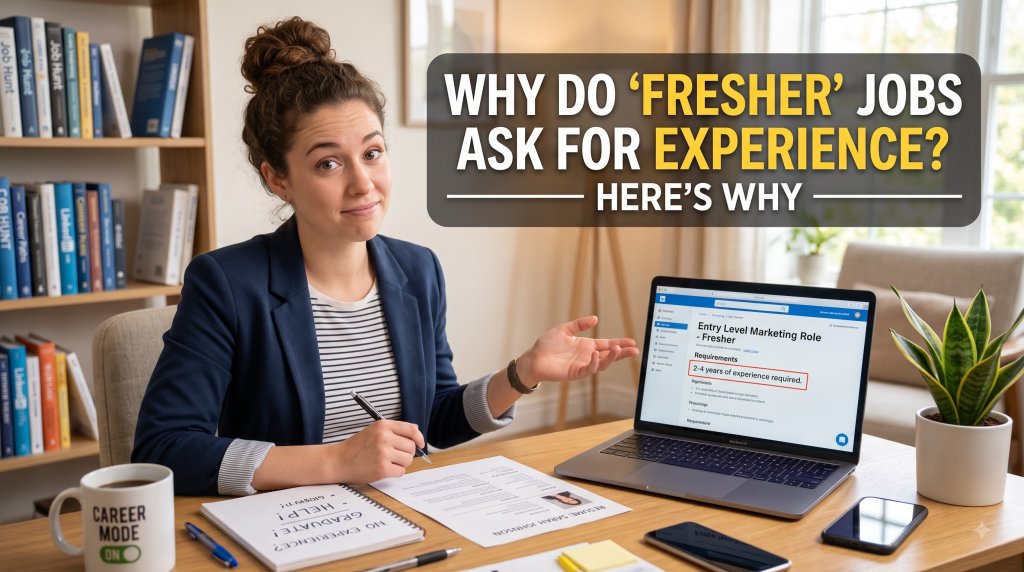
You filter your search to “Fresher” or “Entry Level.” The listing that comes up says exactly that — and then, two lines down, asks for “0-2 years of experience.” You reread it twice, wondering if you’re even eligible to apply for a role that’s supposedly meant for people with zero experience.
This contradiction shows up constantly, and it genuinely confuses a huge number of freshers every hiring season. If you’ve ever wondered why do fresher jobs ask for experience in the first place, here’s what’s actually going on.
We Looked at 45,000+ “Fresher” Listings in Our Database — Here’s the Pattern
After going through listings in our database tagged “fresher” or “entry-level” that also carry an experience range, a few clear reasons keep showing up.
The ATS Default. Many hiring platforms set a default experience filter when a listing is created, and it doesn’t always get manually adjusted for true entry-level roles — “0-2 years” ends up on the post less because it’s a hard rule and more because nobody removed the default.
The Internship Counter. In a lot of cases, “experience” doesn’t mean full-time work experience at all — it includes internships, live projects, or freelance work. A solid three-to-six-month internship in a relevant area often satisfies this range completely, even though it doesn’t read that way on the page.
The Growth-Path Buffer. Some roles are written expecting the person to grow into more responsibility fairly fast, so the listing bakes in a small experience buffer from the start, even though the actual starting point is genuinely entry-level.
The Copy-Paste Template. A fair number of listings are built off an older template originally written for a slightly senior version of the same role, and the experience line simply never got edited down for the fresher-specific opening.
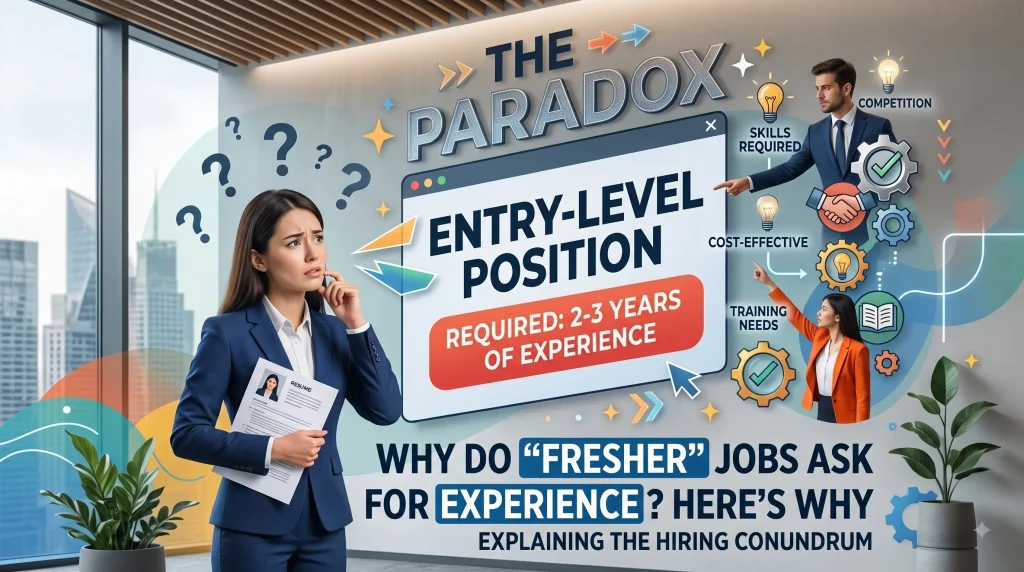
Table of Contents
What Actually Counts as Experience
This is the part most existing advice skips. If a listing says “0-2 years” and you have none of what looks like formal work experience, take stock of what you might already have that fits:
- Internships, even short or unpaid ones, in a relevant function
- Substantial college projects, especially ones with a real deliverable or measurable outcome
- Freelance or part-time work, even informal or self-sourced
- Relevant certifications combined with a portfolio or project work
None of this needs to be dressed up as more than it is — it just needs to be framed clearly as relevant experience on your resume, rather than left out because it doesn’t feel like a “real job.”
Freshers vs. Candidates With 1-2 Years: Why the Line Blurs
For a true fresher with zero internships or project work, this experience range can feel like a locked door, but it usually isn’t one — many companies hiring for genuinely entry-level roles will still consider a strong fresher candidate, especially if the rest of the profile is solid.
For someone with a year or two of experience, the confusion runs the other way — you might wonder whether you’ve “aged out” of fresher-specific openings, when in practice, many companies are comfortable considering slightly experienced candidates for roles technically labeled entry-level, since the range exists precisely to cover that gap.
What To Do Instead
- Apply if you’re within the range, even at zero. A “0-2 years” listing almost always still considers genuine freshers — it’s a range, not a minimum floor of 2.
- Reframe your projects and internships as experience on your resume, rather than listing them separately as an afterthought. This alone often closes the perceived gap.
- Don’t rule yourself out over a number you can’t fully verify. You have no way of knowing from the outside whether “0-2 years” reflects a genuine requirement or a template default — applying costs you very little either way.
- If you’re asked directly in an interview, be upfront about your actual experience level, and let your project or internship work speak for the gap, rather than trying to inflate what you’ve done.
The word “fresher” on a listing usually means exactly what it says. The number next to it is often just noise from how the post was built, not a locked requirement standing between you and the role.
If you’re a fresher looking for genuinely open entry-level roles, here’s today’s list of fresh openings on JobVisitors
Frequently Asked Questions
If a “fresher” job asks for 0-2 years of experience, should I still apply with zero experience? Yes, in most cases. The range typically exists to accommodate a spread of candidates, including true freshers, and the presence of an upper limit doesn’t mean the lower end is being ignored.
Do internships count as experience for these listings? Usually, yes. Internships, meaningful college projects, and freelance work are commonly counted toward these experience ranges, even though the listing itself doesn’t spell that out.
Why do fresher job posts ask for experience at all if the role is meant for beginners? It often comes down to platform defaults, templates copied from more senior postings, or a small built-in buffer for growth — not necessarily a strict, deliberate requirement.
Is it worth asking a recruiter directly whether true freshers are being considered? Yes. A brief, direct question during the application or an early screening call — whether candidates with no formal experience are being considered — is a completely reasonable thing to ask and often gets a straightforward answer.