How to Handle a Background Verification Email After Accepting an Offer
 By Jobvisitors
October 6, 2026
6 min read
By Jobvisitors
October 6, 2026
6 min read
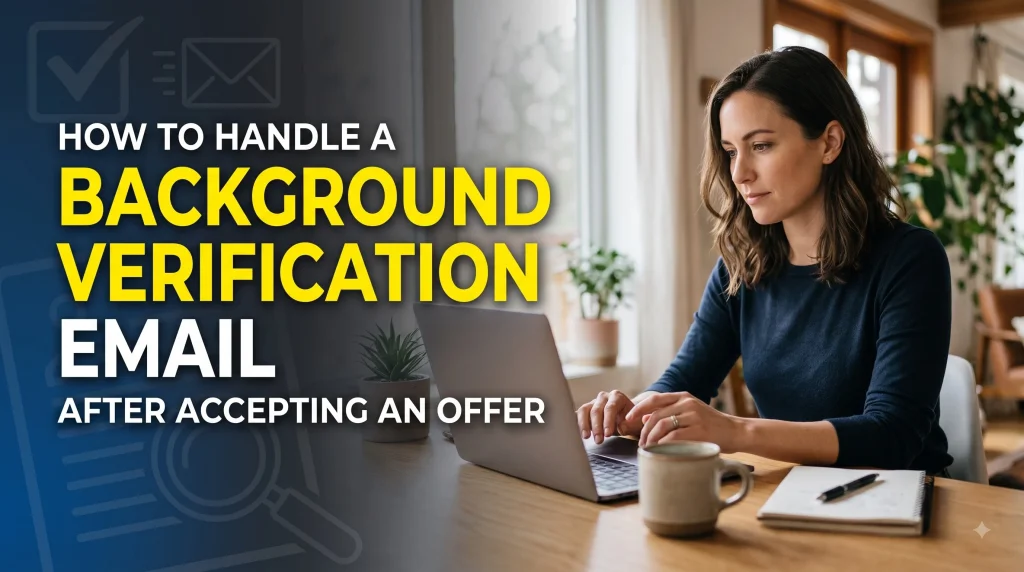
The Moment a BGV Email Lands Right After You Said Yes
You signed the offer letter, told two people close to you, and finally exhaled. Then a background verification email after accepting an offer shows up, with a portal link, a document list, and a deadline that sounds more urgent than it probably is. Your stomach does something strange, even though you’ve done nothing wrong.
How People Actually React
The Document Hoarder. Within the hour, every certificate you’ve ever been issued is out on the bed or spread across a desktop folder. Marksheets from school, a degree you haven’t opened in years, payslips from two jobs ago. It’s productive panic, and it usually ends with you finding one document that’s missing or has a smudged date.
The Quiet Rewriter. You open your resume and read it as a stranger would, checking every date and title against what a former employer might say. A “Senior Associate” that was officially “Associate II.” A joining date you rounded to the month. Nothing dishonest, just small softenings that suddenly look bigger in this light.
The Pre-Confessor. You draft an email to HR explaining a tiny mismatch before anyone has asked about it, sometimes at midnight. The instinct comes from a good place, but the draft usually explains far more than the situation needs.
The Pause Button. You read it once, close it, and tell yourself you’ll deal with it this weekend. The portal link sits unopened while the deadline quietly gets closer, and the avoidance does more damage than any actual discrepancy would.
Most people move through two of these in the same evening. The Document Hoarder and the Quiet Rewriter often show up together.

Table of Contents
Why This Happens
A background verification email after accepting an offer arrives at the worst possible emotional moment. You’ve mentally moved on from the old job, maybe told people, maybe started planning around the new salary. The email reminds you that the offer still isn’t fully final, and that other people will now check your story against records you don’t control. Nobody likes being checked, even when they have nothing to hide, and the discomfort is sharper because you can’t see who is checking or how closely. Verification scope and timing differ from company to company, so you’re also reacting to an unknown, and unknowns tend to feel worse than most real problems.
Freshers vs. Professionals: What Each Group Actually Worries About
For freshers, the worry usually centers on education. Percentages that were rounded on the application, a pending backlog that was cleared late, a degree certificate that hasn’t been issued yet. The check feels like a judgment on your whole academic record, and a small gap can look huge when it’s your only track record.
For professionals, the worry moves to employment history. Does the relieving letter match the dates on your resume? Was a short stint left off? Will your last manager be contacted before you’ve even resigned? Professionals also carry a practical risk freshers rarely face: the verification and your notice period can overlap, and that is when a stalled check becomes expensive.
Both groups tend to overestimate how hostile the process is. Most verification is routine document and record matching, and the real trouble comes from discrepancies people hide, not from minor ones people mention plainly.
What To Do Instead
- Read the email slowly and check who sent it. Confirm it matches the company and the recruiter you’ve been speaking with, and look at what exactly it asks for. If a link asks for money or unusual personal details, treat it with suspicion and confirm with your recruiter first.
- Collect your documents before opening the portal. Offer letter, relieving and experience letters, recent payslips, degree and marksheets, and ID proofs. Having them ready makes the form take twenty minutes instead of two anxious evenings.
- Lay your resume next to your documents and compare dates and titles. Fix what’s yours to fix. If something on the resume doesn’t match the paperwork, you want to know now.
- If there’s a real mismatch, say so early, briefly, and in writing. One calm line to your recruiter (“my certificate shows X, my resume says Y, here’s the correct detail”) is far better than hoping nobody notices.
- Respond within the stated window, even if only to ask a question. A short reply that you’re gathering documents keeps the process moving, while silence reads as a problem.
If you’re thinking about resigning, find out how long verification is expected to take at that company before you do. Practices differ, and a short question to your recruiter is reasonable.
The Line to Remember
A background check mostly punishes the stories people hide, not the details they mention first.
If this email has you thinking about what else is out there, Jobvisitors has real openings worth a look while you wait.
FAQs
Is it normal to get a verification request right after signing the offer letter? Yes, it’s a common step. Timing varies by company, and some start it before the offer is signed while others wait until afterward.
How long does verification usually take? It depends on the company, the agency they use, and how quickly your previous employers and institutions respond. Ask your recruiter for their expected timeline rather than assuming.
What should I do if a document doesn’t match what’s on my resume? If a background verification email after accepting an offer makes you notice a mismatch, tell your recruiter early and plainly, with the correct detail and the document that supports it. Explaining a small mismatch up front is almost always easier than having it surface during the check.
Should I resign before verification is complete? Practices differ between companies, so it’s worth asking your recruiter how long verification typically takes and whether the offer is fully confirmed before you submit your resignation.