
Resigned Based on a Verbal Offer? Here’s What Can Go Wrong
 By Jobvisitors
July 21, 2026
5 min read
By Jobvisitors
July 21, 2026
5 min read
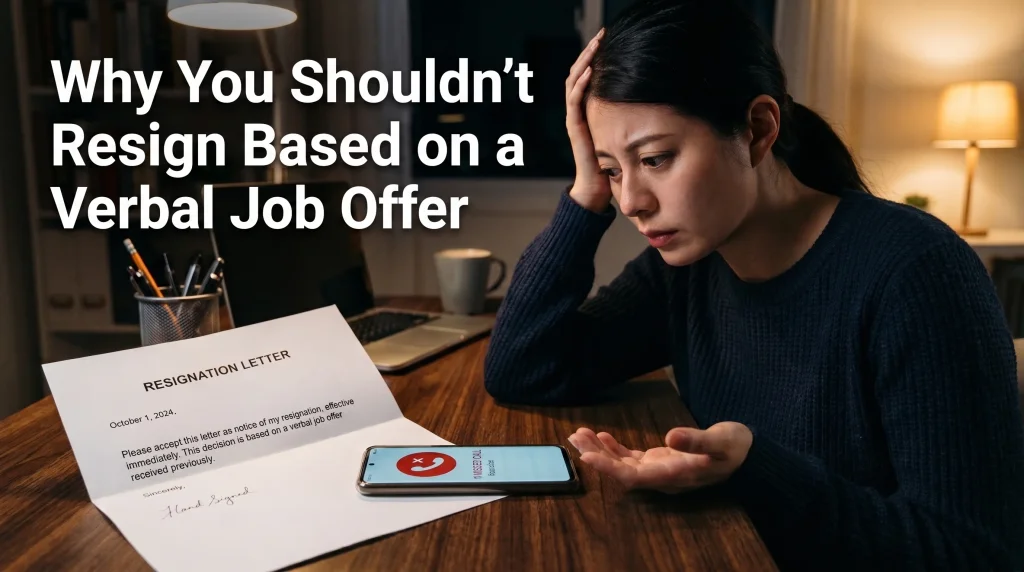
Resigned Based on a Verbal Offer? Read This First
Karan got the call on a Thursday afternoon. The hiring manager sounded genuinely enthusiastic — role confirmed, salary confirmed, start date discussed. “We’ll get the formal letter to you by early next week, but consider it done.”
He walked into his manager’s office that same evening and resigned. Two weeks later, the “formal letter” still hadn’t arrived. Three weeks later, he got an email instead — the position had been put on hold due to a sudden restructuring, and the hiring manager who’d made the call had, coincidentally, left the company in between.
Karan was now unemployed, with a resignation already submitted and accepted, and no offer to show for it.
This is one of the most damaging mistakes in a job search, precisely because it doesn’t feel like a mistake in the moment — it feels like trusting someone who sounded completely genuine.
Why This Happens So Easily
A verbal offer from a real hiring manager, especially one who’s clearly enthusiastic, doesn’t feel provisional — it feels final. The person on the call has decision-making authority, they’ve said specific numbers and dates out loud, and turning around and asking “can you put that in writing before I do anything?” can feel like you’re questioning their word, even though it’s a completely reasonable, standard request.
The uncomfortable truth is that a verbal offer represents intent, not a guarantee. Between that phone call and your actual joining date, there’s still budget sign-off, background verification, sometimes a final internal approval that hasn’t technically happened yet — none of which the hiring manager necessarily controls, even if they sound certain.
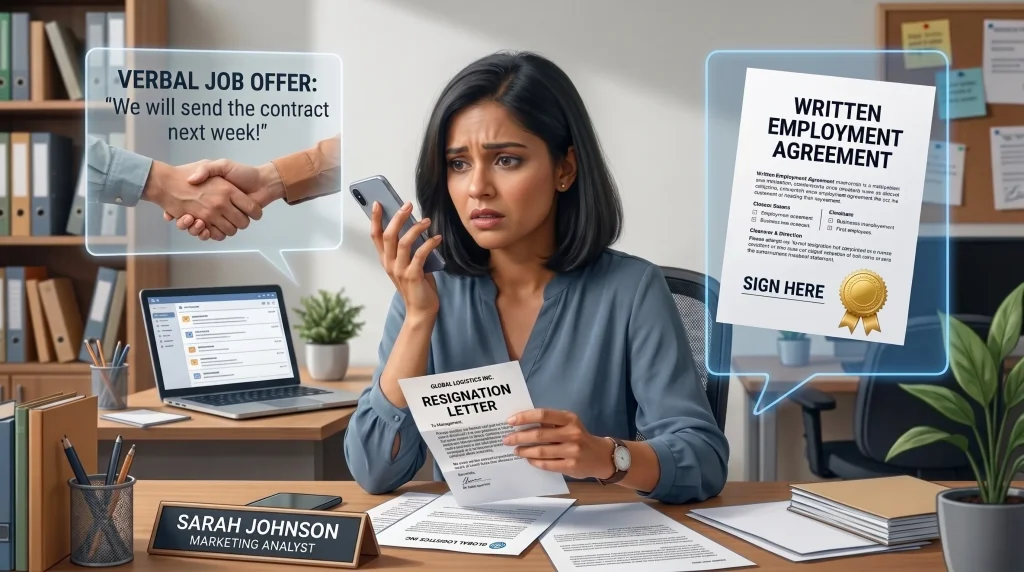
Table of Contents
How Long Should You Actually Wait
There’s a practical answer here, not just a warning.
A signed, formal offer letter — with role, salary, and start date in writing — should typically follow a verbal offer within a few business days if the company is organized and the offer is genuine. If a week passes with no written offer and no clear explanation for the delay, that’s a reasonable point to follow up directly and ask when to expect it, without it coming across as distrustful. If two weeks pass with continued vague answers, that’s a signal to hold off on any irreversible step — resigning, declining other interviews, or turning down other offers — until you actually have something in writing.
The written offer isn’t a formality to rush past. It’s the actual point where an intention becomes something you can rely on.
What To Do Instead
- Never resign on the strength of a phone call alone. However confident the hiring manager sounds, wait for the signed letter — this single rule prevents almost every version of this mistake.
- Ask for a timeline directly. A simple, professional question — “That’s great to hear, when can I expect the formal offer letter?” — is completely normal and expected, not a sign of distrust.
- Keep other options open until the letter is in hand. Don’t withdraw from other interviews or decline competing offers based on a verbal confirmation alone.
- If you must give notice early for a valid reason, communicate the risk to your current employer honestly. In rare cases where timing genuinely doesn’t allow for waiting, some people choose to inform their current manager they’re in the final stages elsewhere rather than formally resigning outright, keeping the door open a little longer.
- If it’s already gone wrong, don’t treat it as your fault. A hiring manager who was genuinely optimistic isn’t the same as one who misled you deliberately — internal changes happen for reasons entirely outside your control.
A verbal offer is real enthusiasm from a real person. It just isn’t the same thing as a guarantee — and treating the two as identical is the one mistake worth genuinely avoiding.
If you’re back in the market and want your next offer to actually be in writing before you act on it, here are today’s fresh openings on JobVisitors.
Frequently Asked Questions
Is it safe to resign after I’ve resigned based on a verbal offer that sounded certain? It’s generally not recommended — even a confident, specific verbal offer can fall through due to internal changes on the hiring company’s side that have nothing to do with you. Waiting for a signed offer letter is the safer standard.
How long is it normal to wait for a written offer after a verbal one? A few business days is typical for an organized company. If a full week passes without one, it’s reasonable to follow up directly; if two weeks pass with continued delays, it’s worth holding off on any major decisions until the letter arrives.
Is it rude to ask for a written offer before resigning? No. Asking when to expect the formal offer letter is a standard, professional request, and any reasonable hiring manager will expect and respect it.
What should I do if my offer falls through after I’ve already resigned? Focus on re-engaging your network and other active applications immediately rather than treating it as a personal failure — offers fall through for internal reasons far more often than anything related to the candidate.