
Added to Work WhatsApp Group Before Joining? What to Do
 By Jobvisitors
July 27, 2026
5 min read
By Jobvisitors
July 27, 2026
5 min read
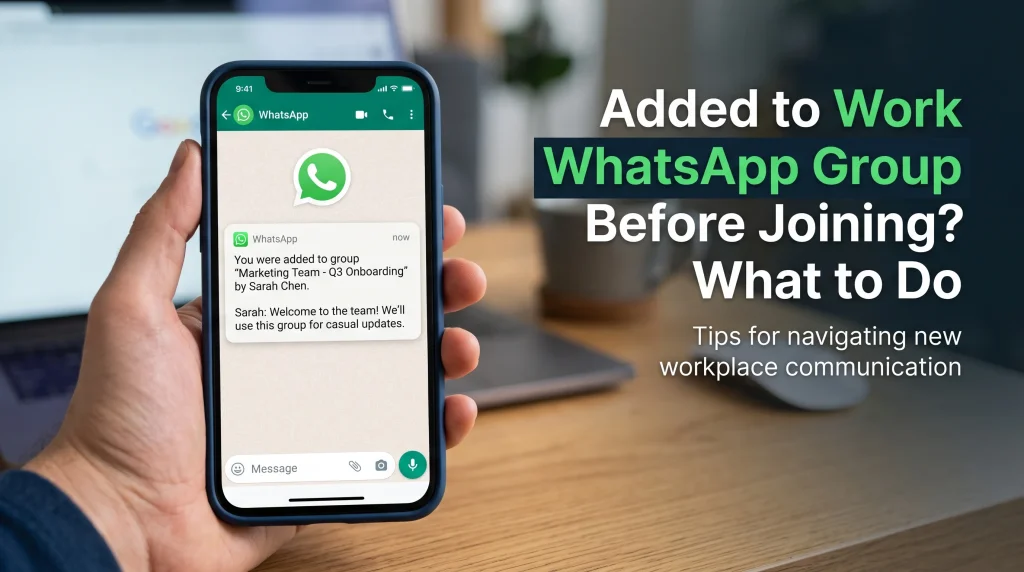
You haven’t even started yet, and your phone already buzzes: “Added you to Marketing Team 🚀.” Suddenly you’re staring at a group of ten people you’ve never met, mid-conversation about something you have zero context on, and you have no idea whether you’re supposed to say something or just quietly exist until Monday.
Getting added to work whatsapp group before joining your actual first day has become a completely normal part of starting a new job, especially across Indian workplaces — and somehow nobody ever tells you the unspoken rules for how to handle it.
The Four Ways People React to This
The Over-Introducer. Sends a long, carefully worded message within minutes of being added — full name, role, a line about being excited to join the team, maybe an emoji to seem approachable. Immediately re-reads it four times, wondering if it was too much.
The Silent Observer. Says absolutely nothing. Reads every message, learns names and inside jokes quietly, and waits until day one to speak for the first time in person, treating the group purely as a source of information, not interaction.
The Emoji Reactor. Doesn’t type a single word, but reacts to a few messages with a thumbs-up or a laughing emoji here and there — present enough to not seem absent, without the pressure of composing an actual sentence.
The Late-Joiner Panic Checker. Checks the group compulsively, worried that something genuinely important — a schedule change, a document, an instruction — will get buried before they’ve technically started and they’ll walk in on day one already behind.
None of these reactions are wrong. The group chat itself is a strange, undefined space — you’re present, but not yet really part of the team, and nobody’s ever explained what that in-between status is supposed to look like.

Table of Contents
Why This Feels More Awkward Than It Should
A work WhatsApp group has none of the structure of an actual meeting or email thread — there’s no clear expectation for who should speak, when, or how much. Add to that the fact that you’re not officially employed yet, and every message feels like it’s being evaluated as a first impression, even though most of your future teammates are barely paying attention to a new name in the group. The ambiguity, not the group itself, is what causes the overthinking.
Freshers vs. Professionals: The Same Group, Different Pressure
For a fresher, this is often the first time navigating a professional group chat at all, so the uncertainty is less about tone and more about basic etiquette — how formal is too formal, is it okay to use emojis, should replies come quickly or not at all.
For a working professional, the etiquette itself is usually familiar, but the pressure shifts toward calibration — not wanting to seem overeager by jumping into every conversation, but also not wanting to seem disengaged or too senior to bother introducing yourself properly.
What To Do Instead
- Send one short, simple introduction — once. A single message with your name and role is enough: “Hi everyone, I’m [Name], joining as [Role] from [date]. Looking forward to working with you all.” No need to say more than that.
- Match the group’s existing tone before adding personality. Skim a few recent messages first — a group full of formal updates calls for a different tone than one full of memes and casual banter.
- You don’t need to reply to everything. Reading along without responding to every message is completely normal; you’re not expected to participate in ongoing conversations before you’ve actually started.
- Flag genuinely important logistics, don’t sit on them. If something in the group affects your first day — timing, location, documents needed — it’s fine to ask a direct, simple question rather than quietly worrying about it.
- Save real personality for in person. The group chat is a low-stakes place to exist quietly; you don’t need to build your reputation there before you’ve even walked in the door.
Being added to the group early isn’t a test — it’s mostly just modern onboarding happening a few days ahead of schedule. One clear message is all the “good impression” this moment actually requires.
If you’re prepping for a new role and want to line up what’s next, here are today’s fresh openings on JobVisitors.
Frequently Asked Questions
Should I introduce myself immediately after being added to a new team’s WhatsApp group? A short, simple introduction within the first day or so is a good idea, but there’s no need to rush it the moment you’re added — waiting a few hours to see the group’s tone first is completely fine.
Is it okay to stay silent in the group until my actual first day? Yes. Reading along without actively participating is normal and won’t be held against you — most people understand you’re not officially part of the team yet.
What if something important is discussed in the group before I start? It’s reasonable to ask a direct, brief question if it affects your first day specifically. For general team chatter unrelated to your onboarding, it’s fine to simply note it and follow up once you’ve actually started.
Is it unprofessional to use emojis in a new work WhatsApp group? It depends on the group’s existing tone. If teammates are already using emojis and casual language, matching that is fine; if the group looks more formal, it’s safer to keep your own messages plain until you get a better sense of the culture.